

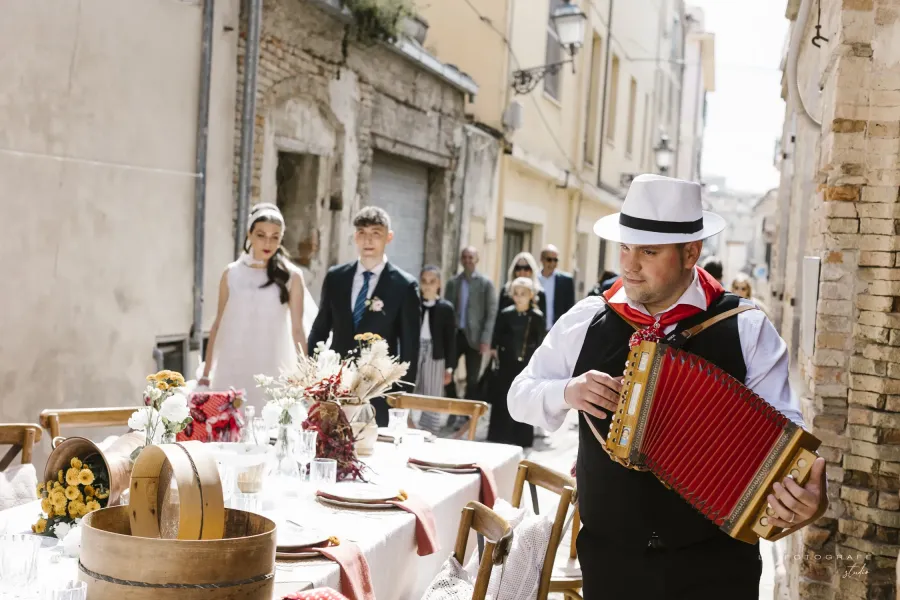
COLUMN
behind the destination –
Where the policies that foster the growth of wedding tourism originate
1.
Destinations are not born. they are built
Whenever we choose a destination, we tend to assume that its success depends on the beauty of its landscape, the quality of its hospitality infrastructure, or the richness of its historical and cultural heritage.
This is the part we see—the part that gets photographed, talked about, and promoted.
Yet there is another, far less visible dimension—one that rarely enters public discourse but ultimately determines whether a territory succeeds or fails.
It is the capacity to forge a shared vision among stakeholders.
Over the years, I have had the opportunity to work alongside municipal administrations, Chambers of Commerce, Local Action Groups (LAGs), businesses, and regional organizations dedicated to promoting wedding tourism. I have taken part in technical roundtables, institutional meetings, collaborative planning processes, and discussions between public- and private-sector stakeholders. Although these experiences have been diverse, they all share a common thread: “destination weddings” were almost always viewed merely as a market segment, rather than as a strategy for regional development.
This is a fundamental distinction.
When the wedding industry is perceived solely as an economic sector, the focus shifts exclusively to individual businesses—venues, photographers, caterers, wedding planners, and hotels. These are, of course, essential players. However, a destination is more than just the sum of its individual points of excellence.
A destination truly comes into being when these outstanding stakeholders learn to recognize themselves as part of a larger, interconnected system.
At that point, the role of public institutions also shifts.
Ultimately, regional policy is mainly about creating the conditions for heritage to become an opportunity.
A municipality is not merely the authority that grants permits for civil ceremonies; it can become the actor that transforms weddings into a tool for enhancing the territory. A Chamber of Commerce does more than just support individual businesses—it can foster the development of an entire supply chain. A Local Action Group (LAG) can turn a local project into a broader strategy for rural development. Even a civil registry office—often perceived as a mere administrative outpost—can help make a destination more attractive if it is integrated into a broader vision.
This is precisely the cultural shift that, in my view, our country is called upon to make.
Italy possesses arguably the world’s richest variety of locations suited for weddings and romantic getaways: picturesque villages, historic residences, stunning landscapes, rich traditions, exceptional food and wine, and communities capable of sharing their authentic identities. Yet the mere existence of these resources is not enough.
Resources do not automatically translate into development.
Development emerges when someone builds connections.
It happens when the public and private sectors share common goals.
It occurs when the economic impact of a phenomenon is measured.
It arises when joint actions are planned.
It begins when we stop promoting individual entities and start building a cohesive destination.
This is the work that often remains invisible—and it is also what fascinates me the most.
Because behind every destination we now consider a success story, you won’t just find extraordinary places. You will find administrators who chose to invest, entrepreneurs who learned to collaborate, professionals who built networks, and communities that came to understand how hospitality could become a core part of their own identity.
Ultimately, regional policy is mainly about creating the conditions for heritage to become an opportunity.
Through this column, I intend to highlight what usually stays out of the frame. Not the ceremonies themselves, but the strategies that make them possible. Not just the venues, but the decisions that transform a place into a destination. Not merely individual events, but the processes that generate value over time. Because I believe that wedding tourism represents a significant segment of the tourism offering—and an intriguing lens through which to observe how a region builds its future around a tourism product whose potential has yet to be fully realized.
The idea behind this:
Every destination tells a story. But, even before that, it tells the story of a choice—the choice made by a community that has decided to work together.
The future is not about discovering new places; it is about preparing communities.


Related Articles


